Posted on Leave a comment

Spirit Animals in Shamanic Paganism: Reclaiming Their Wisdom

spirit animal

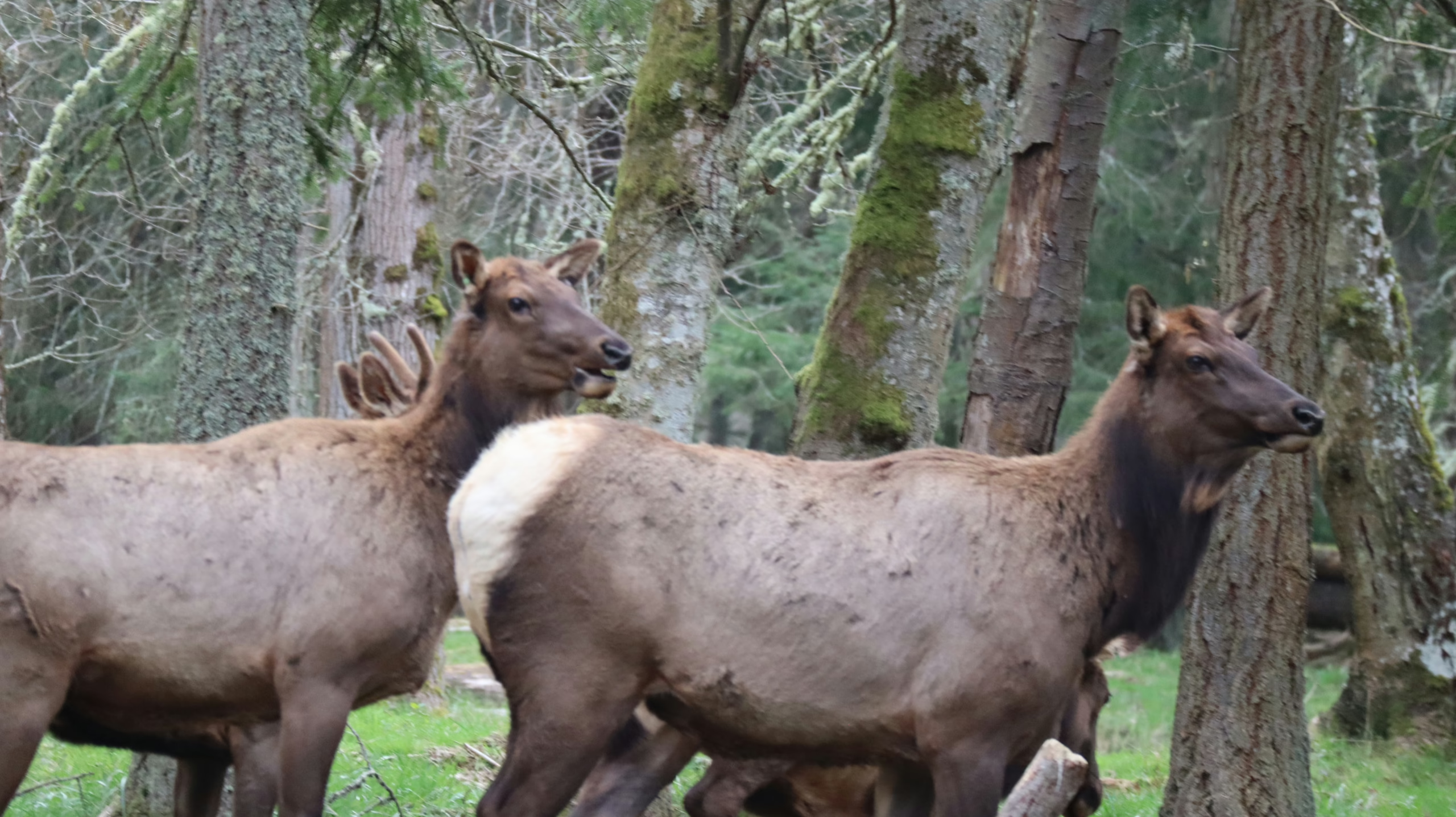
In shamanic Paganism, the concept of the spirit animal is both ancient and pretty much universal. While popular culture often associates animal spirits with Indigenous North American traditions, the truth is far more expansive. Every indigenous culture, including European lineages like Norse Paganism, Druidry, and Germanic animism, has honored animal spirits as sacred guides, protectors, and teachers. To work with animal spirits today is not an act of cultural appropriation. It is a return to ancestral wisdom that belongs to all of us.

What Is a Spirit Animal?

A spirit animal is a spiritual ally that embodies specific qualities, archetypes, or energies. These beings are conscious entities that walk beside us in the unseen realms. In shamanic practice, animal spirits may appear in dreams, meditations, or ritual journeys, offering insight, protection, and healing.

Each spirit animal carries a unique medicine. The wolf teaches loyalty and intuition. The bear offers strength and introspection. The eagle brings vision and a higher perspective. These animals are not chosen…they choose us, often appearing when we need their wisdom most.

Spirit Animals Across Cultures

The belief in animal wisdom is not exclusive to one region or people. It is a global belief rooted in animism, the understanding that all life is sacred and interconnected.

spirit animal
  • Celtic and Druidic traditions revered animals like the stag, boar, raven, and salmon as symbols of divine power and ancestral connection. Tribal names like the Bibroci (“Beaver Tribe”) and Eburones (“Yew Tribe”) reflect animal spirit identities.
  • Norse Paganism honored fylgjur, which are spiritual companions often appearing as animals that reflected a person’s fate or character. The wolf and raven were especially potent symbols of transformation and prophecy.
  • Germanic tribes viewed animals like the bear and eagle as emblems of martial strength and divine favor.
  • Slavic, Baltic, and Finno-Ugric cultures also practiced animistic rites involving animal spirits, often tied to seasonal cycles and ancestral rituals.

These traditions show that the wisdom of animal spirits is a shared inheritance.

Why Work with Spirit Animals?

In shamanic Paganism, working with a spirit animal is a way to deepen your connection to the natural and spiritual worlds. These allies help you:

  • Achieve personal transformation by reflecting on your inner strengths and challenges.
  • Receive guidance during times of uncertainty or spiritual seeking.
  • Heal emotional wounds by offering archetypal support and energetic protection.
  • Strengthen ritual practice by anchoring your intention in embodied wisdom.

Spirit animals respond to your energy, your needs, and your growth. The more you honor them, the more they reveal.

How to Discover Your Spirit Animal

There is no one-size-fits-all method for connecting with a spirit animal. The best answer is to find one that is right for you. Here are a few practices you can try that are rooted in shamanic Paganism:

  • Meditation and journeying: Use rhythmic drumming or breathwork to enter a trance state and invite your spirit animal to appear.
  • Dreamwork: Pay attention to recurring animal symbols in your dreams as they often carry messages from the unconscious.
  • Nature observation: Notice which animals show up repeatedly in your life or evoke strong emotional responses.
  • Divination: Use tarot, runes, or ogham to ask which animal spirit is guiding you at this time.

Remember, your spirit animal may change as you evolve. Some stay for a lifetime; others appear for a season.

Honoring the Relationship

Once you’ve connected with a spirit animal, the relationship becomes sacred. You can honor it through:

  • Offerings and altars: Create a space with symbols, images, or tokens that represent your animal guide.
  • Ritual invocation: Call upon your spirit animal during ceremonies, spellwork, or healing sessions.
  • Creative expression: Write, draw, or dance your connection and let the animal’s energy flow through your art.
  • Ethical living: Respect the animal’s habitat and spirit by living in harmony with nature.

Taking a spirit animal is not about control. It’s about communion with their sacred energies.

Reclaiming Ancestral Wisdom

In a time when spiritual practices are often commodified or misunderstood, it’s vital to remember that working with spirit animals is cultural remembrance, not cultural appropriation. European Pagan traditions, like those of the Celts, Norse, and Germanic peoples, have long honored animal spirits. By reconnecting with these roots, we reclaim a sacred bond that transcends borders, cultures, and time.

Spirit animals are timeless allies, waiting to walk beside us once again.


Subscribe to Sencha Skene

Sencha Skene Odin Shaman Drum

Discover mystical music, guided meditations, and nature-inspired rituals. Explore ancestral energy, Pagan wisdom, and storytelling. Join a reflective, spiritual community and experience new albums, performances, and creative journeys. Visit Sencha Skene’s YouTube channel for the latest news, music, videos, and more! Click on the button below!

Receive Sencha’s insights into the mystical realm, nature-inspired reflections, updates on new musicalbums, and live performances. Connect with ancestral energy, Pagan wisdom, and a reflective, spiritual community. Stay inspired and in the flow of magic. Subscribe to Sencha Skene’s newsletter using the button below!


Posted on Leave a comment

Dancing with Shadows: The Collective Unconscious and Pagan Mysticism

collective unconscious

Beneath the surface of ordinary awareness lies a vast, unseen ocean that is a realm where memory, myth, and dream converge. This is the domain of the collective unconscious, a term coined by the psychologist Carl Gustav Jung to describe the shared psychic inheritance of humanity. Unlike the personal unconscious, which holds forgotten or repressed experiences unique to the individual, the collective unconscious is universal, ancient, and profoundly alive. It contains archetypes: primordial images and motifs that have echoed across cultures, civilizations, and ages. These archetypes are the silent architects of myth, ritual, and spiritual experience, shaping not only our dreams but the very way we perceive reality.

Paganism and the Collective Unconscious

For contemporary Pagans, the notion of the collective unconscious can inform our practice as we delve into mystical realms. When we call upon deities, spirits, or sacred Ancestors, we are often tapping into energies that transcend personal history. These figures, gods, goddesses, fae, and spirits, exist not only in mythology but within the psychic fabric of humanity itself. Their stories, passed down through generations, are manifestations of archetypal energy, which is nourished by the human imagination and ritual practice. In time, they become egregores. In honoring these presences, we participate in a living dialogue with the collective psyche, breathing vitality into symbols that might otherwise remain dormant.

The Red Book

Jung’s exploration of these depths reached a luminous and unsettling apex in his Red Book, a manuscript of visions, dreams, and active imagination that he kept largely private during his lifetime. Within its illuminated pages, Jung recorded encounters with figures both terrifying and sublime, engaging directly with the unconscious in a form of sacred, personal, and almost Pagan ritual. The Red Book is significant because it reveals that the collective unconscious is not merely theoretical; it is experiential. Jung entered into conversation with its archetypal forms, and in doing so, he demonstrated that the psyche is alive, interactive, and often astonishingly autonomous. For modern Pagans, this is a mirror of ritual practice itself: when we invoke a deity, perform a chant, or meditate on ancestral energies, we are engaging with archetypal currents that flow through the collective unconscious.

Contemporary Paganism and the Collective Unconscious

Contemporary Paganism, with its emphasis on cycles, nature, and sacred narrative, provides fertile ground for these archetypal energies. Seasonal festivals, lunar rituals, and meditative journeys are bridges to the collective unconscious. When a circle of practitioners calls to the Horned God at Samhain, or to the Triple Goddess at Esbats, they are participating in a timeless chorus, an echo of what Jung might describe as the universal mind. These rituals awaken latent patterns within the psyche, connecting the individual to a shared spiritual heritage.

The collective unconscious also explains the resonance of myth across cultures. Gods and goddesses may bear different names and forms, yet their essence in their archetypal functions such as the Trickster, the Mother, the Warrior, the Sage, remains strikingly similar. This universality underlines a deeper truth: the divine is not merely “out there” in the world but also “in here,” within the depths of our shared psyche. This is often reflected in the phrase, “As above, so below.” Contemporary Paganism, by invoking these archetypes, allows practitioners to experience the sacred as a living, breathing presence, accessible in both ritual and meditation.

An Invitation to Personal Experience of Unity

Ultimately, engaging with the collective unconscious is an invitation. It is an invitation to explore shadow and light, to honor ancestors and gods, and to recognize the deep, connective tissue that binds all human experience. Through ritual, music, meditation, and reflection, the invisible currents of archetypal energy can be felt, guiding us toward insight, transformation, and connection. Jung’s Red Book reminds us that these currents are not abstract; they are alive, demanding acknowledgment, dialogue, and reverence. As contemporary Pagans, we walk with these currents daily, co-creating a living mythology that stretches from the dawn of humanity into the luminous potential of today.

In the dance between self and archetype, nature and spirit, we find ourselves entwined with the collective unconscious, a boundless reservoir of memory, myth, and magic. By listening, honoring, and participating, we awaken not only the divine in the world but the divinity within ourselves.


Subscribe to Sencha Skene

Sencha Skene Odin Shaman Drum

Discover mystical music, guided meditations, and nature-inspired rituals. Explore ancestral energy, Pagan wisdom, and magical storytelling. Join a reflective, spiritual community and experience new albums, performances, and creative journeys. Visit Sencha Skene’s YouTube channel for latest news, music, videos, and more! Click on the button below!

Receive Sencha’s insights into the mystical realm, nature-inspired reflections, updates on new musicalbums, and live performances. Connect with ancestral energy, Pagan wisdom, and a reflective, spiritual community. Stay inspired and in the flow of magic. Subscribe to Sencha Skene’s newsletter using the button below!

Posted on Leave a comment

7 Powerful Ways the Pagan Community Strengthens Druidic and Shamanic Practice

Pagan community

In both Druidic and shamanic paths, the journey of the individual is deeply intertwined with the collective spirit of the tribe. We seem to have forgotten in America that while individualism is good, we still need community. While modern Paganism often emphasizes personal growth and solitary practice, the role of the Pagan community remains vital. For Druids and shamans alike, community serves as a living web that connects practitioner to practitioner, human to spirit, and individual to Earth. It is within this web that rituals gain strength, healing deepens, and transformation becomes sustainable.

1. Reclaiming the Tribal Spirit

Both Druidic and shamanic traditions are communal systems. In ancient times, the Druid served the tribe not as a ruler, but as a guide, mediator, and keeper of wisdom. Similarly, the shaman was the bridge between the seen and unseen worlds, using their gifts for the benefit of the people. The Pagan community of today mirrors this ancestral structure by fostering belonging, mentorship, and mutual care. Through festivals, coven gatherings, and online circles, practitioners recreate that sacred tribal bond that once held entire cultures together.

2. The Circle as Sacred Space

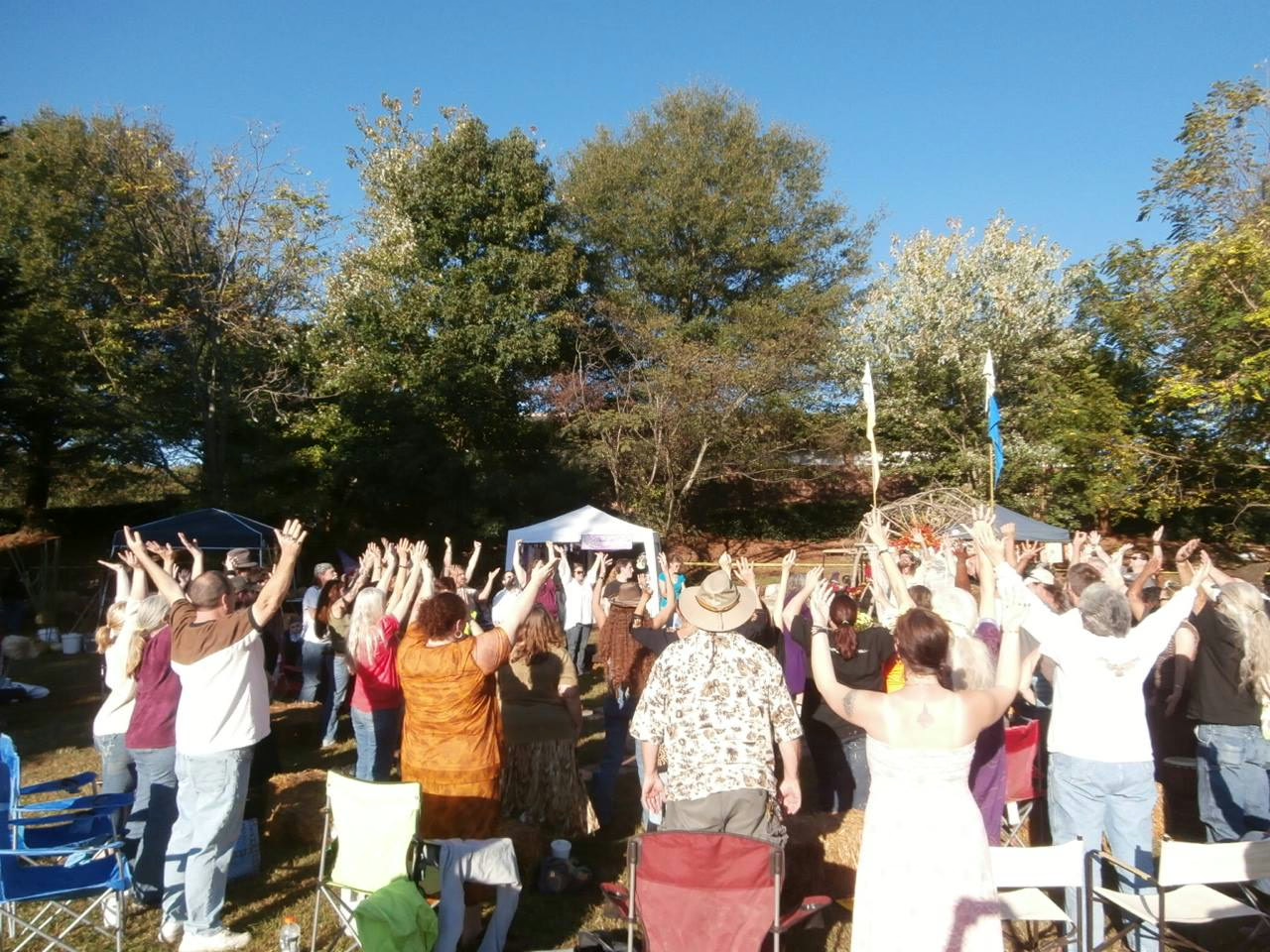
In Druidic and shamanic traditions, the circle holds symbolic and functional power. It represents unity, balance, and equality. These values are mirrored in the structure of the Pagan community itself. No one stands above another in a sacred circle; all are equal participants in the cosmic dance. Rituals performed in community circles amplify intention through shared energy. Whether through a grove’s seasonal ceremony or a shamanic drum circle, the collective presence of many hearts and voices enhances spiritual resonance, grounding the ritual in both Earth and spirit.

3. Shared Wisdom and Oral Tradition

Before written records, Druids and shamans passed on knowledge through story, song, and ritual. This oral tradition was a form of spiritual communion. In today’s Pagan community, this tradition continues through storytelling gatherings, workshops, and mentorship programs. Every tale of initiation, every song sung around a campfire, adds to the living mythology of the tribe. This exchange keeps ancient wisdom alive, not as a museum piece, but as a breathing, evolving practice.

4. Healing Through Connection

Community provides a mirror for personal healing. In the solitary path, it’s easy to lose balance or perspective; in community, we find reflection, support, and accountability. Within the Pagan community, healing rituals often draw upon collective empathy through the shared drumming, chanting, and presence of others can move emotional blockages and restore equilibrium. Both Druids and shamans understand that individual wellness contributes to collective harmony. When one member heals, the web of the tribe becomes stronger.

5. The Role of Ceremony and Celebration

Seasonal festivals such as Beltane, Lughnasadh, and Samhain form the heartbeat of the Pagan community. These gatherings remind practitioners that spirituality is not confined to private meditation but is expressed through shared celebration. Dancing the Maypole, honoring ancestors, or making offerings to the land spirits are communal acts that reinforce the sacred bond between people and nature. Each festival becomes a ceremony of gratitude and reciprocity, deepening both ecological and social awareness.

6. Mentorship and Apprenticeship

In both shamanic and Druidic systems, learning traditionally unfolds through direct apprenticeship. Modern Pagan communities continue this lineage by fostering mentorship relationships between elders and newcomers. These connections ensure that sacred practices are transmitted with integrity, protecting the lineage while allowing for creative evolution. Mentorship within the community provides not only technical skills like divination, energy work, or herbalism but also the ethical framework and spiritual maturity necessary for responsible practice.

7. Collective Vision and Global Healing

The modern Pagan community extends far beyond local groves or circles. It has become a global network united by a shared vision of harmony with the Earth. As climate change, social division, and spiritual disconnection plague the world, Druids and shamans alike are stepping forward to model an alternative way of being that is rooted in balance, reverence, and reciprocity. Community rituals for environmental healing, ancestor reconciliation, and planetary peace demonstrate how collective spiritual action can ripple outward into real-world transformation.


In the end, the Pagan community is both the foundation and the flowering of Druidic and shamanic paths. It is where wisdom is preserved, healing is magnified, and spirit is embodied through relationship. To walk these paths in isolation is to know the song; to walk them in community is to hear the harmony. When the circle gathers, the old ways awaken not as echoes of the past, but as living voices of the Earth itself.


Follow Sencha on YouTube! Click the button below!

Posted on Leave a comment

Hamingja: Norse “Luck” in Spiritual Practice

hamingja

In Norse mythology and culture, the concept of hamingja is significant as a representation of personal fortune, ancestral power, and spiritual energy. Some people equate it with “luck,” but it is much more than that. It intertwines deeply with individual actions, mindfulness, and the collective wisdom of the ancestors. This ancient belief system offers insights for modern practitioners of Norse spiritual paths, emphasizing interconnectedness, intention, and self-awareness.

What is Hamingja?

The word originates from Old Norse traditions and translates loosely to “luck” or “fortune.” However, its meaning extends beyond random chance. It is a spiritual force that influences a person’s fate and the outcomes of their endeavors. It was considered an ancestral gift, passed down through generations, and strengthened or weakened by one’s actions.

In Old Norse society, the concept was not static; it evolved based on how individuals conducted themselves. Courage, honor, and ethical behavior would enhance your destiny, while dishonesty, cowardice, or betrayal would diminish it. This dynamic nature tied it closely to concepts of mindfulness and self-awareness—values that resonate deeply with contemporary Pagan practices.

Hamingja and Pagan Mysticism

Pagan mysticism centers around the principles of interconnectedness, reverence for nature, and spiritual growth. Hamingja aligns seamlessly with these values in several ways:

  1. Ancestral Connection In Pagan traditions, ancestors are revered as sources of wisdom and guidance. Similarly, one’s “luck” or “fate” is rooted in ancestral power. By honoring ancestors through rituals, offerings, and meditations, practitioners can strengthen their connection to this spiritual force. These acts create a bridge between the past and present, fostering a sense of continuity and support.
  2. Sacred Intentions The idea that fate can be influenced by personal actions mirrors the contemporary Pagan focus on intention and energy. Rituals, spells, and meditative practices often emphasize clarity of purpose and ethical alignment. When your actions align with these principles, it amplifies spiritual energy through honorable deeds.
  3. Empowerment and Resilience Hamingja reminds us that our actions and mindset shape our destiny. This mirrors the Pagan belief in personal responsibility and the power of free will. Through mindful living and conscious decision-making, practitioners can cultivate a resilient spirit and favorable outcomes.

Hamingja and Mindfulness

Mindfulness, the practice of being fully present and aware of one’s thoughts, emotions, and surroundings, is a cornerstone of many spiritual paths, including modern Paganism. Hamingja embodies mindfulness in action, as it requires awareness of how one’s choices affect both personal fortune and the broader web of connections.

Mindfulness Practices

  1. Gratitude Rituals Expressing gratitude to ancestors and the forces that guide your life strengthens your fate or “karma.” A simple daily ritual could include lighting a candle and offering thanks for the blessings and lessons you’ve received. This practice cultivates a sense of mindfulness and appreciation.
  2. Ethical Reflection Dedicate time each day to reflect on your actions and their alignment with your values. Journaling about your choices, intentions, and their impact on others can help you stay grounded and aware of how you contribute to your spiritual fortune.
  3. Meditative Connection Engage in meditations that connect you with your ancestors or spiritual guides. Visualize their wisdom flowing into you as a stream of light. This practice cultivates a deeper sense of connection and mindfulness.

Strengthening Hamingja in Everyday Life

Hamingja is not just an abstract concept; it can be cultivated in practical ways that align with Pagan mysticism and mindfulness:

  • Honor Your Roots: Create an ancestral altar or research genealogy to connect with your lineage. By understanding your origins, you honor the source of your ancestors and therefore the source of your “luck” or “fate.”
  • Live with Integrity: Let your actions reflect your highest values. Upholding honesty, kindness, and courage in daily life enhances your spiritual fortune.
  • Mindful Rituals: Incorporate mindfulness into your Pagan practices. Whether it’s through seasonal celebrations, rituals, or daily affirmations, intentional living strengthens your hamingja.

Hamingja as a Tool for Spiritual Growth

In both Pagan mysticism and mindfulness, spiritual growth requires self-awareness and a commitment to ethical living. Hamingja serves as a reminder that our spiritual and physical worlds are interconnected. When you nurture and cultivate it, you align yourself with ancestral wisdom, universal energy, and the principles of mindful living.

This ancient concept offers a powerful framework for navigating modern life with purpose and clarity. As you honor your roots, live with intention, and cultivate mindfulness, you contribute to the spiritual legacy of those who come after you. In this way, it becomes a living, evolving force—a bridge between the past, present, and future.


Share Your Thoughts on Hamingja!

Does your spiritual tradition have a concept of fate, luck, karma, or something similar? Share your thoughts in the comments below!

Don’t forget to check out my YouTube channel!