Posted on Leave a comment

An Ethical Pagan Life: 7 Illuminating Steps

ethic ethical ethics Pagan

The ethical life of a Pagan is not a rigid law but a living practice. It is a weaving of spirit, intention, and action. Since Paganism is so eclectic, and the majority of Pagans identify as eclectic rather than rigid followers of a particular path, an ethical Pagan framework is more important now than ever. With that in mind, I’ve created a few ethical principles that hopefully all Pagans share in common. These seven steps offer guidance for those who wish to move through the world with reverence, courage, and conscious alignment with the sacred, while still walking the path of everyday life.

1. Honor the Web of Life

Begin each day with awareness: notice the birds stirring, the wind rustling through leaves, the subtle pulse of life all around. In practice, this means making choices that minimize harm: choose sustainably, respect the creatures and plants you encounter, and offer gratitude to the earth for its gifts. Even small actions like a careful step on the forest floor, or a blessing before a meal, can reaffirm your place within the living tapestry.

2. Practice Reciprocity

Ethics in Paganism is an exchange: take only what you need, and return in kind. Harvest herbs or flowers, but leave seeds behind; borrow wisdom, but share insight freely. In relationships, be mindful of give-and-take. Acts of kindness, support, and generosity ripple outward, balancing what we receive from the world and from others. Keep a personal ritual of reflection: consider what you have taken this week, and what you have offered back.

3. Speak and Act with Integrity

Walk your words as you walk the earth. Align your promises and deeds with truth. This could mean setting honest boundaries, confessing mistakes, or following through on commitments. Rituals of truth-telling could include silent meditation, journaling, or honoring nature. Such practices can strengthen your connections with nature, others, and yourself, ensuring that your interactions resonate with authenticity and clarity.

4. Embrace the Shadow

The shadow is not an enemy but a teacher. Ethical Paganism asks you to notice the impulses, fears, or judgments you might otherwise hide. Confronting them can be as simple as observing anger without reacting, or as profound as seeking reconciliation with those you have wronged. Rituals of shadow work might include writing down fears and burning them, meditating on hidden desires, or honoring ancestors’ struggles. Such practices turn inner confrontation into spiritual growth.

5. Act with Compassion

Each day, let your heart guide your deeds. Offer comfort to someone in need, extend patience to those struggling, and support life wherever you can. Compassion is strengthened through small rituals: lighting a candle for someone in pain, sending silent blessings to the sick, or practicing mindful listening. Ethical living blooms from empathy, a recognition that every being carries its own sacred spark.

6. Steward the Sacred

Treat sacred spaces, knowledge, and rituals with care. Whether it’s a personal altar, a grove in the forest, or ancient teachings, approach them with respect and humility. Study with intention, preserve traditions, and engage with the mysteries thoughtfully. This might include keeping a dedicated journal for magical or spiritual insight, preparing ritual spaces with care, or learning about plants, stones, and symbols in their proper context.

7. Celebrate Joy Consciously

Finally, honor joy as part of the ethical path. Dance under moonlight, sing to the wind, create music, art, or poetry. These acts are offerings to the world and affirmations of life. A daily practice of gratitude or creative expression reinforces alignment with the sacred, reminding the Pagan seeker that ethics is conscious, celebratory engagement with existence.

Living Ethically as a Pagan

Each step is a thread in a living, breathing tapestry of ethical Pagan life. They are guides, not laws; invitations to notice, act, and reflect. Over time, these practices cultivate harmony within oneself, with the community, and with the earth itself. They remind us that ethics is not an abstract concept but a rhythm, a melody sung in each action, each choice, and each moment of mindful living.

By honoring life, balancing give and take, speaking truth, embracing shadow, practicing compassion, stewarding sacred mysteries, and celebrating joy, the Pagan seeker transforms ordinary life into a luminous practice of ethical magic. These practices illuminate the path forward…a way to move through the world with courage, reverence, and grace.


Subscribe to Sencha Skene

Sencha Skene Odin Shaman Drum

Discover mystical music, guided meditations, and nature-inspired rituals. Explore ancestral energy, Pagan wisdom, and storytelling. Join a reflective, spiritual community and experience new albums, performances, and creative journeys. Visit Sencha Skene’s YouTube channel for the latest news, music, videos, and more! Click on the button below!

Receive Sencha’s insights into the mystical realm, nature-inspired reflections, updates on new musicalbums, and live performances. Connect with ancestral energy, Pagan wisdom, and a reflective, spiritual community. Stay inspired and in the flow of magic. Subscribe to Sencha Skene’s newsletter using the button below!


Posted on Leave a comment

Wealth Hoarding: The Ultimate Hoarding Disorder

wealth of spirit by living sustainabily

Wealth is often mistaken for wisdom, and material success is seen as the highest achievement. But beneath the surface of luxury lifestyles and corporate empires lies a darker truth: many rich people are addicted to money in the same way a hoarder is addicted to clutter. They do not simply want financial security or a comfortable life. They want more, endlessly more, piling up wealth far beyond what they could ever spend or use. This addiction, like hoarding, is rooted in fear, trauma, and a need for control. It consumes not only the individual but also the world around them. Forests are stripped, oceans are poisoned, and communities are gutted, all so someone can add a few more zeros to their bank account.

This addiction is a spiritual illness. It is a disconnection from nature, from community, and from the soul. Like the hoarder who cannot part with broken lamps and yellowing newspapers, the wealth addict cannot part with their investments, properties, and influence, no matter how much harm it causes them or the people around them. The pursuit of endless growth becomes a compulsion. On a societal level, this leads to cities expanding like tumors, swallowing up the land and severing people from the natural world. In this paradigm, capitalism is not just an economic system. It is a spiritual pathology. And the ones most deeply infected by it are not the poor but the rich.

What is Shadow Druidry?

Shadow Druidry is a spiritual path that combines ancient Celtic Druidic wisdom with the psychological insights of Carl Jung’s shadow work. Shadow Druidry invites the practitioner to confront and integrate the hidden or repressed aspects of the self…those parts we are ashamed of, deny, or project onto others. These “shadow” elements might include fear, greed, envy, or trauma. Rather than avoiding these dark places, Shadow Druidry embraces them with conscious awareness, ritual, and reverence for nature as a mirror to the human soul. By walking into the metaphorical forest of our inner world, we begin to reclaim the fragmented pieces of ourselves and emerge more whole, authentic, and grounded.

Now consider wealth hoarding, which is the compulsive accumulation of money and resources far beyond any practical need. This behavior often masquerades as ambition or success, but underneath it lies a form of mental illness. It may stem from childhood trauma, emotional deprivation, or a sense of existential emptiness. The hoarder clings to wealth not for the sake of comfort, but to soothe deep inner anxieties about self-worth, mortality, or abandonment. Over time, the need for more becomes insatiable. The hoarded wealth acts as a barrier between the individual and an authentic human connection or spiritual fulfillment. Ironically, the more a person hoards, the more isolated and spiritually impoverished they become.

A Spiritual Cure

Shadow Druidry offers a potent antidote to wealth hoarding by addressing its psychological and spiritual roots. Rather than chase more and more to fill the void, the Shadow Druid turns inward to explore the void itself. Through nature-based rituals, introspective practices, and dream work, Shadow Druidry guides the practitioner to meet the wounded parts of themselves with compassion. A Shadow Druid might ask: What fear is driving this need to accumulate? What belief do I hold about scarcity, survival, or status? What part of me feels so unworthy that it seeks validation through wealth?

These are not easy questions, but they are liberating ones. As the shadow is acknowledged and integrated, the compulsive behaviors begin to lose their power. The person who once hoarded out of fear begins to see that true security does not come from control or accumulation, but from a relationship with the land, with others, and with the sacred self. Shadow Druidry reorients us away from extraction and toward reciprocity. Instead of building fortresses of wealth, it encourages building circles of community. Instead of striving to own more, it teaches how to belong more deeply to place, to people, and to spirit.

In this way, Shadow Druidry is not just a personal healing path; it is a radical spiritual medicine for a world sickened by greed and disconnection. It reveals that the cure for wealth hoarding is not punishment or shame, but deep, soul-level healing of the kind that happens in the quiet of a forest, the stillness of meditation, or the vulnerability of honest self-reflection. By confronting our shadows, we free ourselves from the need to hoard, and we begin to remember who we really are: not consumers, not competitors, but caretakers of the Earth and of each other.

Shadow Druidry and Wealth Hoarding

Shadow Druidry offers a path of healing and resistance. It is a branch of earth-centered spirituality that embraces both the light and the dark aspects of human nature. Rather than deny or repress our inner shadow, consisting of the greed, fear, and pain that lurk beneath our polished personas, Shadow Druidry brings these elements into the open. It teaches that the shadow must be acknowledged, understood, and integrated. Only then can we reclaim our wholeness and live in balance with the Earth.

In Shadow Druidry, wealth hoarding is not seen as a virtue. In Shadow Druidry, cities are seen not as achievements of civilization but as monuments to our disconnection and our eventual destruction. They are places of noise, pollution, surveillance, and alienation, populated by wealth hoarders for whom the only important thing is the accumulation of even more wealth. Such wealth hoarders embody the very traits Shadow Druids seek to heal: excessive consumption, disordered growth, and spiritual emptiness. While ancient Druids once gathered in sacred groves and stone circles, the modern world encourages us to gather in office buildings and shopping malls. Shadow Druids reject this vision of “progress.” We believe the future of the human race lies not in mega-cities and digital empires but in small, sustainable communities rooted in the rhythms of the land. In the Shadow Druid’s version of Utopia, nations would consist of interconnected and linked smaller sustainable communities working together for the good of all.

Intentional Communities: An Alternative to Wealth Hoarding

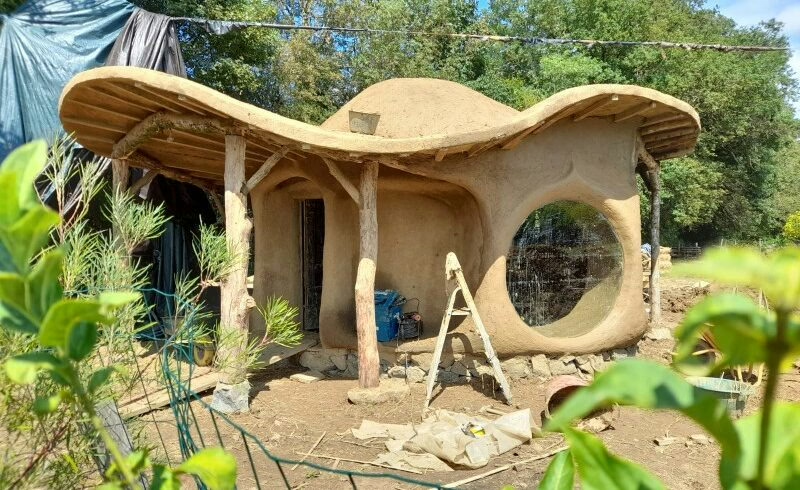
Such communities are not just Utopian fantasies. They are already forming. In eco-villages, intentional living experiments, off-grid homesteads, and permaculture collectives. In these places, people grow their own food, build homes with natural materials, share resources, and live in harmony with the seasons. They seek not wealth but connection. They measure success not by profit but by well-being. This is the antidote to the money addiction that afflicts the rich. In these communities, there is no need to hoard because everything essential is shared and sacred.

Shadow Druidry supports this shift by offering spiritual practices that reconnect us with nature and with the deeper truths within ourselves. These include ritual, meditation, ancestral work, and vision quests, not to escape reality, but to engage it more fully. We look into the dark so that we may walk with integrity in the light. We honor the Earth not as a resource to be used but as a living being to be loved. And we recognize that healing the planet requires healing ourselves.

Shadow Druidry: A Way Out

wealth hoarding leads to sustainable living when it collapses

To the rich who are addicted to money and wealth hoarding, Shadow Druidry offers not condemnation but invitation. The path away from hoarding and fear is not easy, but it is possible. It begins with humility, with surrender, and with a willingness to face the truth. What are you trying to fill with all that wealth? What are you trying to avoid? When you stand naked and alone in the woods, without your titles or accounts, who are you really? These are the questions that Shadow Druidry asks. We ask them not to shame, but to awaken.

In the end, we are all being called back to the land. Whether we arrive willingly or are forced by climate collapse and social unrest, the future is rural, local, and rooted. Shadow Druidry is not just a belief system. It is a guide for the journey ahead. It reminds us that we do not need to hoard wealth to feel safe. We need each other. We need the Earth. And we need to remember what it means to be human.