Posted on Leave a comment

The Power of Sacred Groves in Druidic Practices

sacred groves

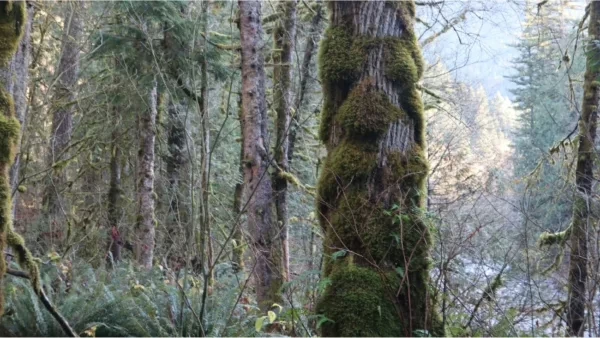
In the quiet heart of the forest, there lies a space unlike any other: the sacred grove. For the Druidic practitioner, sacred groves are living temples, mirrors of the divine, and gateways to the mysteries of the earth. The power of sacred groves lies not only in their beauty but in their capacity to awaken the senses, attune the soul, and connect the practitioner with the rhythms of the natural world.

Sacred groves have long held a central place in Celtic and Druidic traditions. The ancient Druids, described by Roman observers as wise keepers of lore, often performed rituals, divination, and initiations beneath the sheltering boughs of old-growth oaks and other sacred trees. These groves were living sanctuaries, chosen for their resonance with the spiritual currents of the land. Each tree, each stone, each glimmering patch of sunlight contributed to a sacred atmosphere in which the boundary between the human and the divine grew thin, creating a liminal space.

At the heart of these groves is the principle of connection. Trees are not solitary beings; their roots entwine beneath the soil, exchanging nutrients and communicating through networks scientists now call the “Wood Wide Web.” For the Druid, this hidden interconnection is spiritual as well as ecological. Sitting beneath the ancient boughs, we can sense the flow of energy, the pulse of the earth, and the whisper of the Ancestors. Rituals performed in such spaces are amplified by this natural resonance, guiding practitioners toward clarity, insight, and alignment with the cycles of life.

Groves as Places of Transformation

The sacred grove is also a place of transformation. Entering a grove is a symbolic journey into the heart of the self, where distractions fade, and the inner landscape becomes vivid. Druidic rites often involve meditation, chanting, or movement within the grove, facilitating encounters with spirits, deities, or ancestral energies. The Tree of Life meditation in the video above is just one such meditation used to transform oneself using the analogy of the Sacred Tree. These practices open channels of intuition, nurture spiritual growth, and offer guidance that cannot be accessed through the mundane routines of life. In sacred groves, we can witness the cycles of birth, death, and renewal mirrored in the natural world, gaining insight into personal and communal transformation.

Ritual and Ceremony in the Sacred Grove
sacred groves
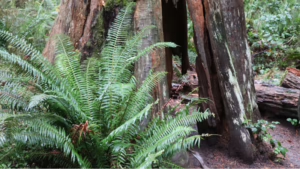
A tree is a community

Rituals within sacred groves are intentionally immersive. Seasonal festivals such as Samhain, Beltane, or the solstices gain heightened power when observed in these natural sanctuaries. The grove itself becomes a participant in the ceremony: the wind carries incantations, the trees absorb offerings, and the soil anchors intentions. Many Druids also use groves for initiations, teaching apprentices to read omens, connect with plant spirits, and attune to elemental forces. The sacred space creates a sense of continuity with the past, linking modern practitioners with generations of wisdom that honor the living world. The trees will speak to us if we learn how to listen.

Healing and Communion

Sacred groves are also potent spaces for healing. The combination of natural beauty, quiet, and spiritual resonance creates an environment conducive to restoring balance within mind, body, and spirit. Walking meditation among the trees, listening to the rustle of leaves, or simply sitting in quiet contemplation can release stress, awaken insight, and inspire creativity. The Druidic approach recognizes that health is not merely physical but interconnected with emotional, spiritual, and ecological well-being. This is an ancient perspective that finds its fullest expression in the embrace of a sacred grove.

Preserving Sacred Groves Today

In our modern world, sacred groves are increasingly rare, yet their importance endures. When I lived in South Carolina, most of the old-growth forests had been harvested, and it was rare to find a tree more than 100 years old. When we destroy a tree, planting another one doesn’t replace the community that thrived in that tree. It doesn’t replace the nests that once resided in its branches. It doesn’t replace the shade for the undergrowth. It doesn’t replace the leaves that created the mulch to feed the forest floor. At least, not for decades and generations to come.

Contemporary Druids and Pagan practitioners often work to protect and restore ancient woodlands, cultivate personal groves, or create ritual spaces that honor the living spirits of trees. Even small groves, planted in community spaces or private gardens, can serve as sanctuaries for reflection, ceremony, and spiritual renewal. By caring for these sacred spaces, practitioners maintain a bridge between human life and the deeper intelligence of the natural world.

The power of sacred groves lies not in human construction but in the alchemy of nature and spirit. They are places where time slows, senses sharpen, and the mysteries of life become tangible. For the Druid, entering a grove is a sacred act of listening, learning, and aligning with the rhythms that sustain the earth. Here, amidst ancient trees and whispering leaves, we may encounter a truth older than words: the world is alive, and in sacred spaces, the human heart may awaken to its own place within the eternal dance.


Subscribe to Sencha Skene
Sencha Skene Odin Shaman Drum

Discover mystical music, guided meditations, and nature-inspired rituals. Explore ancestral energy, Pagan wisdom, and storytelling. Join a reflective, spiritual community and experience new albums, performances, and creative journeys. Visit Sencha Skene’s YouTube channel for the latest news, music, videos, and more! Click on the button below!

Receive Sencha’s insights into the mystical realm, nature-inspired reflections, updates on new musicalbums, and live performances. Connect with ancestral energy, Pagan wisdom, and a reflective, spiritual community. Stay inspired and in the flow of magic. Subscribe to Sencha Skene’s newsletter using the button below!
Posted on Leave a comment

The Seven Stages of Shamanic Journeying: A Druid’s Vision Quest

Vision Quest
vision quest

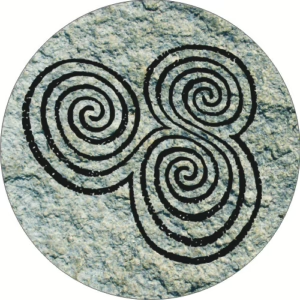
Vision quests are undertaken to seek spiritual insight, personal transformation, and a deeper connection with the natural and unseen worlds, especially during times of transition, healing, or self-discovery. In Pagan and shamanic traditions, a vision quest is a sacred rite of passage. The shamanic journey is not a linear path. It is a spiral of transformation that combines both a linear and a cyclical journey. For those undertaking a vision quest, they may find that what has happened before will happen again, cycles within cycles. With each return of the cycle, the spiritual seeker gains more insight into the way forward, learning more and more as each cycle progresses. This upward spiral is the heart of the vision quest. This may be the reason the spiral shows up so often in shamanic contexts. For the Druidic seeker, this journey of the vision quest is a sacred rite of passage, a descent into the soul’s depths and a return bearing wisdom.

These seven stages of the vision quest are experiential thresholds that guide the mystic through healing, revelation, and rebirth. Whether undertaken through ritual, meditation, or dreamwork, each phase invites the seeker to engage with the unconscious, the collective soul, and the living spirit of the land.

1. The Calling

Every journey begins with a summons. The Calling is the moment the veil thins and something ancient stirs within. It may come as a dream, a crisis, a synchronicity, or a quiet knowing, but it always signals that the soul is ready to awaken. In Druidic tradition, this is the whisper of the awen (the divine breath of inspiration) nudging the seeker toward deeper truth that may be sought in the vision quest.

The Calling is not always comfortable. It disrupts the ordinary and invites the extraordinary. It’s the first step into the unknown, where curiosity becomes commitment.

2. Descent into Silence

To journey inward, one must first descend. The ancient Greeks called this katabasis. The poet Robert Bly called it “time in the ashes.” Joseph Campbell called it “The Belly of the Whale.” This phase is marked by stillness, solitude, and surrender. The seeker enters the cave of the self, shedding distractions and listening for the voice beneath the noise. It is here that the personal unconscious begins to speak, and the collective unconscious opens its gates to respond to the vision quest.

In shamanic Druidic practice, this descent into katabasis is often accompanied by grounding rituals, breathwork, and connection to the Earth element. Silence becomes fertile soil for transformation. It is mandatory for a successful vision quest, because it is not just an external quietness. It is a quietening of the soul through grounding, centering, and meditation.

3. Meeting the Guardian

Every mystic must face a threshold guardian. This is an archetype that tests resolve and reveals hidden fears. This figure may appear as an animal, a sacred Ancestor, or the shadow-self. The Guardian is not an adversary but a mirror, reflecting what must be integrated before deeper wisdom can be accessed through the vision quest.

This confrontation is a rite of passage. It demands honesty, humility, and courage. In facing the Guardian, the seeker begins to reclaim fragmented parts of the self, what Jung called the Shadow.

vision quest

4. Crossing the Threshold

Once the Guardian is met and honored, the seeker crosses into the Otherworld. This is a liminal space where spirit and symbol reign. Here, the laws of ordinary reality dissolve, and the soul encounters visions, guides, and elemental forces. This is the realm of augury, where signs and symbols speak the language of the unconscious. For some, it is a real place. For others, it is the collective unconscious. From the perspective of Pagan mysticism, whether this place is real or not is irrelevant as long as it serves its purpose.

In Druidic shamanism, this crossing during a vision quest is often marked by ritual gateways, sacred circles, or trance states. It is the moment the seeker becomes the traveler.

5. Receiving the Gift

In the heart of the Otherworld, the seeker receives a gift. This may come in the form of an insight, a healing, or a symbol of power. This gift is not always what the ego expects, but it is always what the soul needs. It may come as a word, a vision, or a felt sense of truth.

This phase is the climax of the journey, where the transformation crystallizes. The gift is both personal and archetypal. It is a seed of wisdom that carries the potential to heal and guide.

6. Return and Integration

No journey is complete without a return. The seeker must bring the gift back to the world and integrate its wisdom into daily life. This phase is often the most challenging, as the mundane resists change. But it is also the most vital because it is where magic becomes embodied and healing becomes real. It is the purpose of the vision quest in the first place.

Integration requires discipline, reflection, and community. It’s the phase where the mystic becomes the mentor, the visionary becomes the vessel.

7. The Offering

The final phase is about service. The seeker becomes the guide, the healer, the storyteller. The gift received is offered to the community, to the land, to the lineage. This is the phase of legacy, where personal transformation becomes a collective blessing.

In Druidic tradition, this offering may take the form of ritual leadership, creative expression, or acts of stewardship. It is the moment the journey becomes mythical.

The Seven Stages of Shamanic Journeying spiral through our lives, calling us again and again to deeper truth. For the Druidic mystic, each phase is a doorway to the awen, a chance to listen, transform, and serve. Whether you walk this path through music, meditation, or ritual, the journey is always sacred and always yours.


Subscribe to Sencha Skene

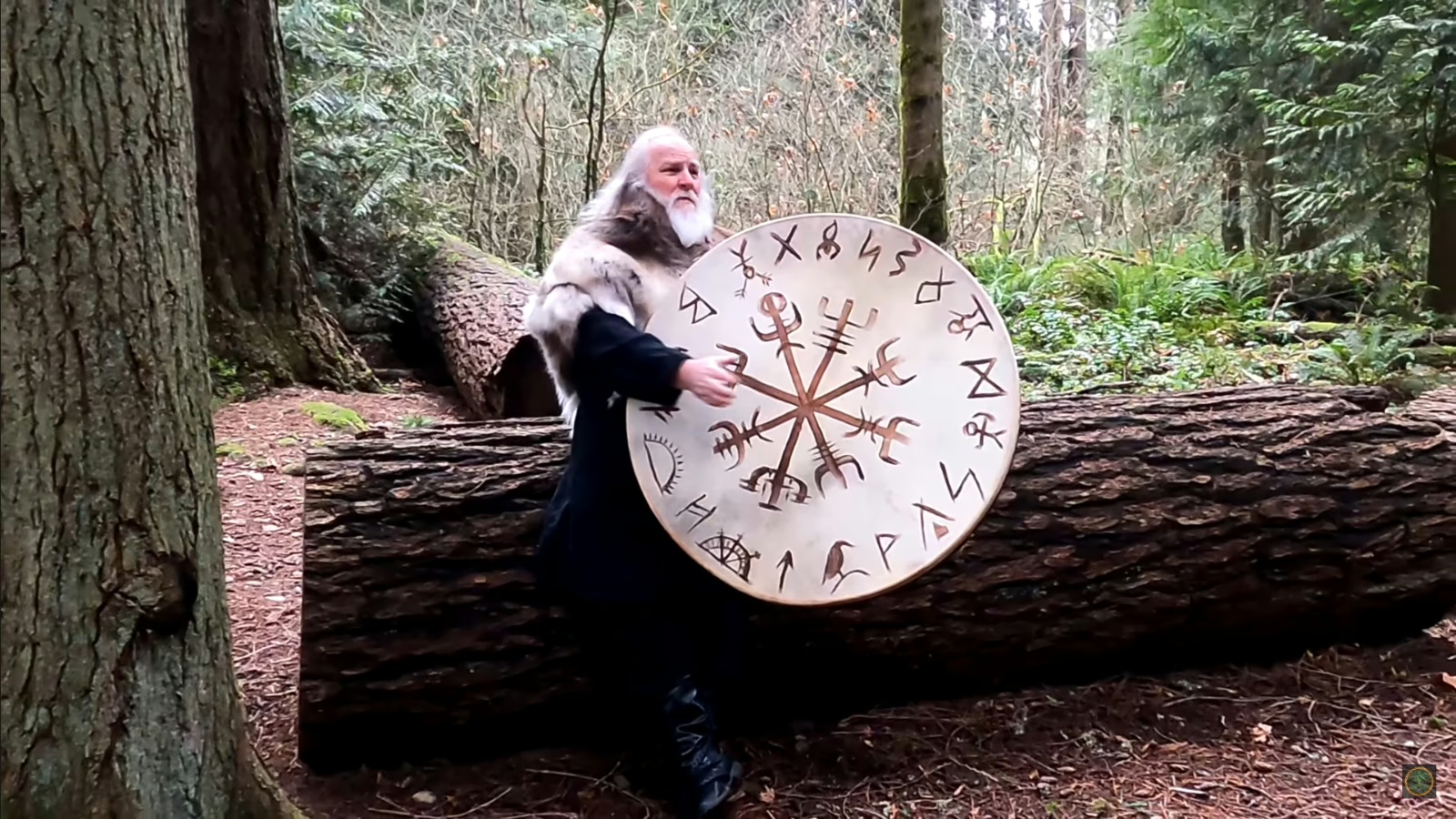
Sencha Skene Odin Shaman Drum

Discover mystical music, guided meditations, and nature-inspired rituals. Explore ancestral energy, Pagan wisdom, and storytelling. Join a reflective, spiritual community and experience new albums, performances, and creative journeys. Visit Sencha Skene’s YouTube channel for the latest news, music, videos, and more! Click on the button below!

Receive Sencha’s insights into the mystical realm, nature-inspired reflections, updates on new musicalbums, and live performances. Connect with ancestral energy, Pagan wisdom, and a reflective, spiritual community. Stay inspired and in the flow of magic. Subscribe to Sencha Skene’s newsletter using the button below!